
EFHA World 17.04.2026
30.10.2026
accessoriesartcraft
Welcome to EFHA’s spooky online cabinet of curiosities
Spooky season is almost over, but the uncanny never really fades in Europeana and European Fashion Heritage Association’s archives. To mark the occasion, we curated a selection of 10 objects imbued with a disquieting allure, chilling aura and haunting presence, all part of the collections held by museums, galleries and repositories from our net.
The result is a digital cabinet of curiosities and object stories, spanning centuries, functions and mediums – from fashion catalogues and sculpture to costume and photography. Welcome to EFHA’s Wunderkammer!
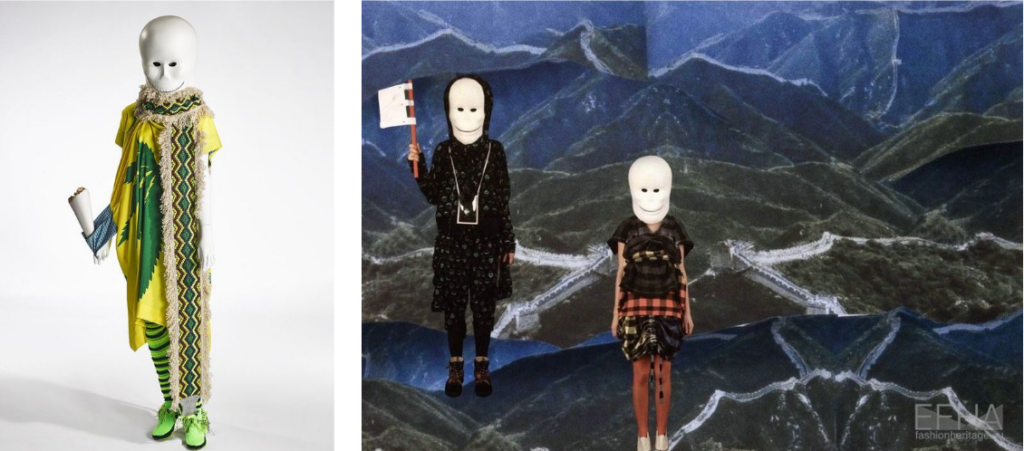
Fashion designer Bernhard Willhelm emerged from the Antwerp avant-garde scene of the late 1990s, founding his namesake label with longtime collaborator Jutta Kraus in 1998. After years of bold, extravagant and provocative designs, his Autumn-Winter 2007/2008 Womenswear Collection – photographed by Shoji Fuji – features models wearing a white mask with an elongated oval face and a completely bald, featureless head. With its small and narrow eye holes and a subtle, curved smile giving a cheeky yet uncanny expression, the mask is definitely a stand out in our cabinet of curiosities.
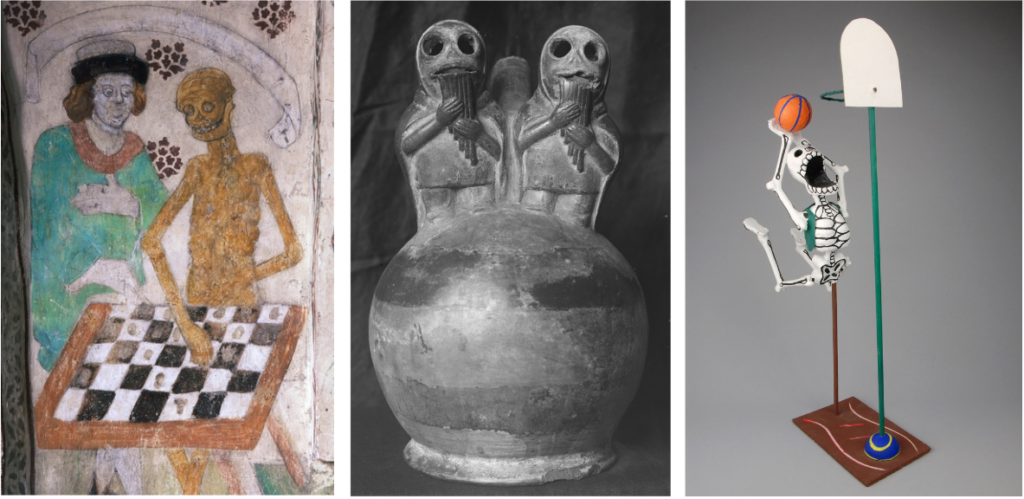
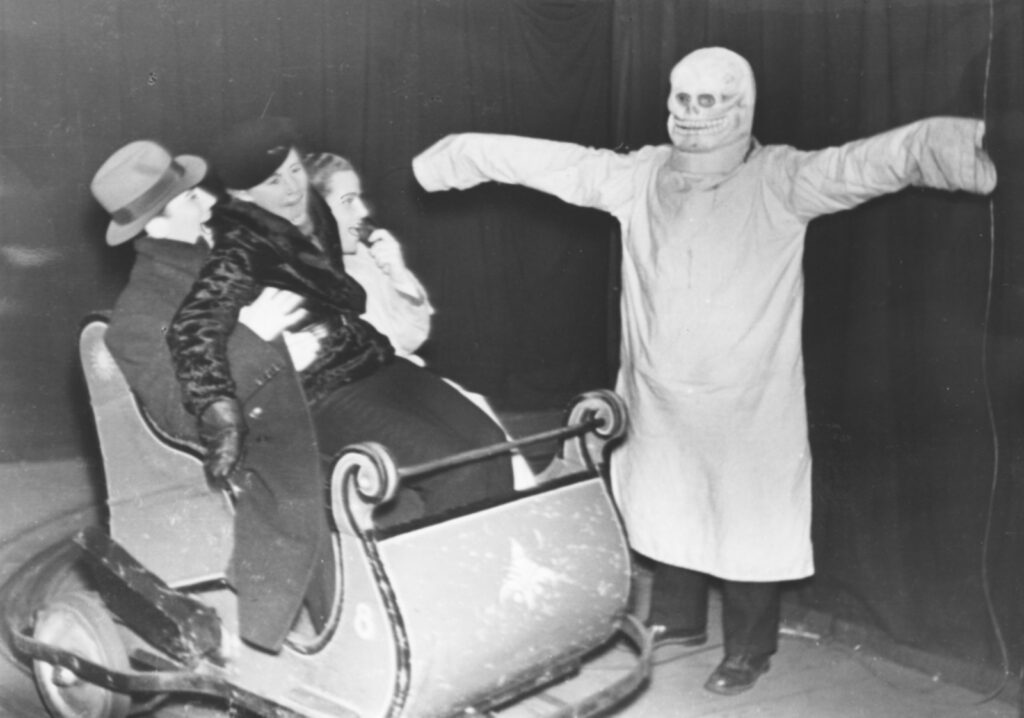
Chess, the panflute, basketball, hide & seek. Death has often been portrayed as a sentient being engaged in actions that usually involve an opponent or simply a spectator petrified by the sights or sounds accompanying the entity. In our cabinet of curiosities, we see several personifications of death: it can be found winning a chess game in a vault painting at the church of Täby, Sweden, or executing a lethal slam dunk in papier-mâché; it can also appear as ritual vessels playing the pan flute or even standing as a static, utterly terrifying amusement park animatronic.
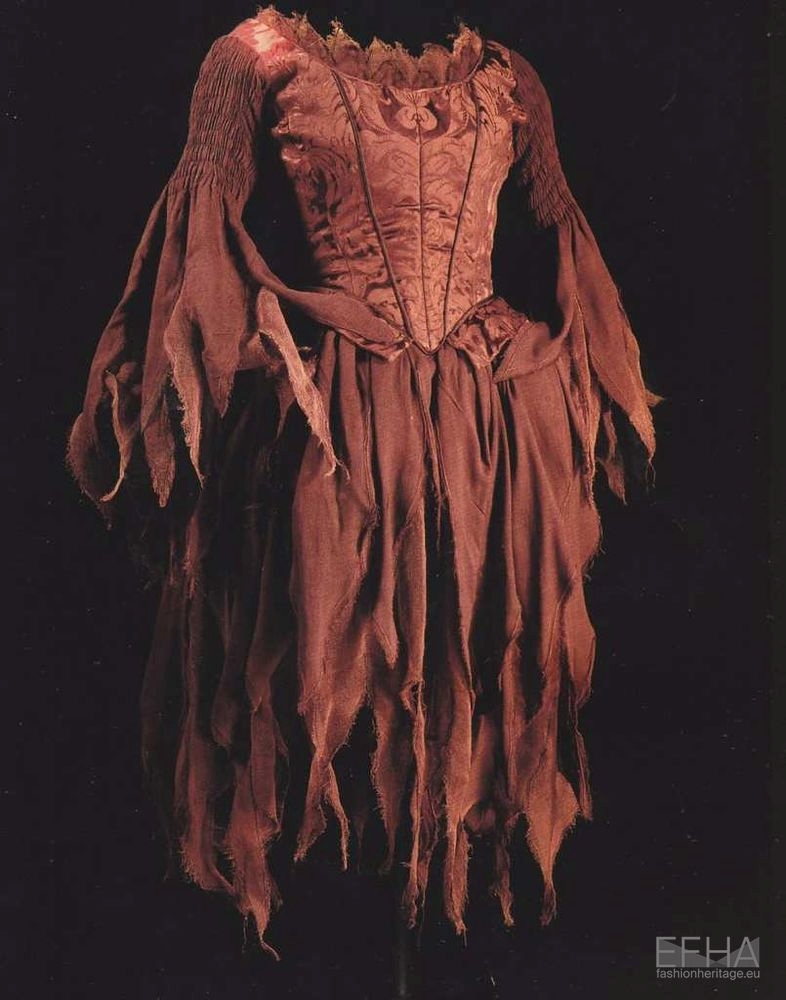
In 1989, Florence’s opera house Maggio Musicale Fiorentino staged Arrigo Boito’s Mefistofele, directed by Carlo Maestrini. For the occasion, legendary costume designer Anna Anni envisioned an otherworldly, or better, underworldly look for the sabbath ballet. Worn by an ensemble of eight dancers during the infernal dance, the costumes evoke an unsettling, dark fantasy that heightens the scene’s dramatic tension. Today, this piece graces our Wunderkammer, on loan from the complete set of eight original garments preserved in the archives of Fondazione Cerratelli.
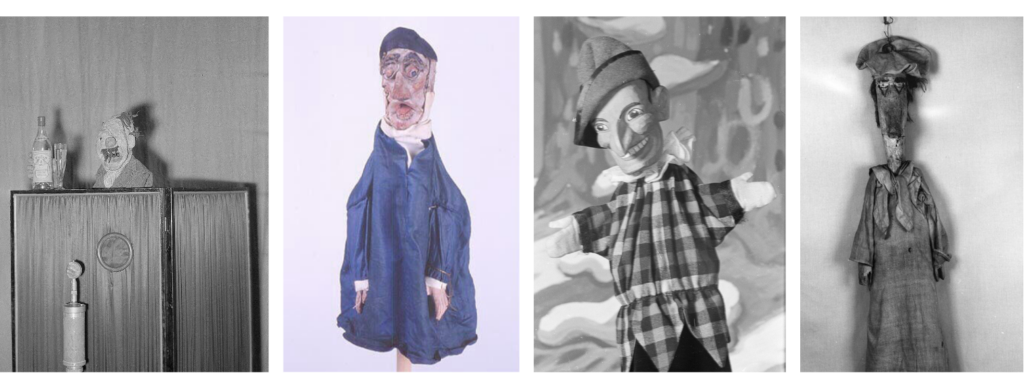
Whether for humorous and satirical performances, magic tricks or religious practices, our cabinet of curiosities holds a vast collection of… puppets!. With their grotesque features, exaggerated expressions and unsettling human likeness, these personages display the enduring art of puppetry and its ability to evoke both fascination and unease.
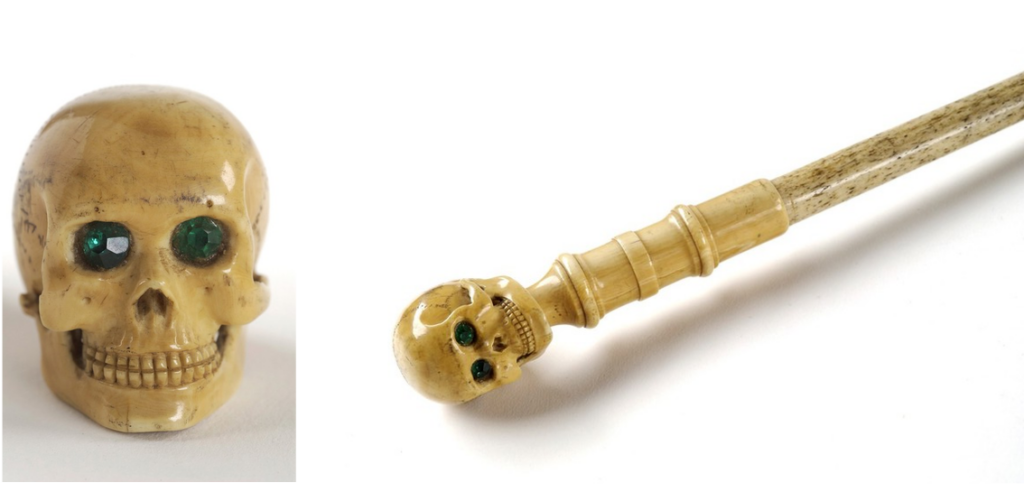
Made of whalebone, with an ivory skull pommel and emerald eyes, Charles Darwin called this walking stick his morituri – referencing the Latin phrase Morituri te salutant (“Those who are about to die salute you”), to remind him of his mortality and shortness of life. Nearly a metre long, this walking stick is a once-in-a-lifetime find of our archives.
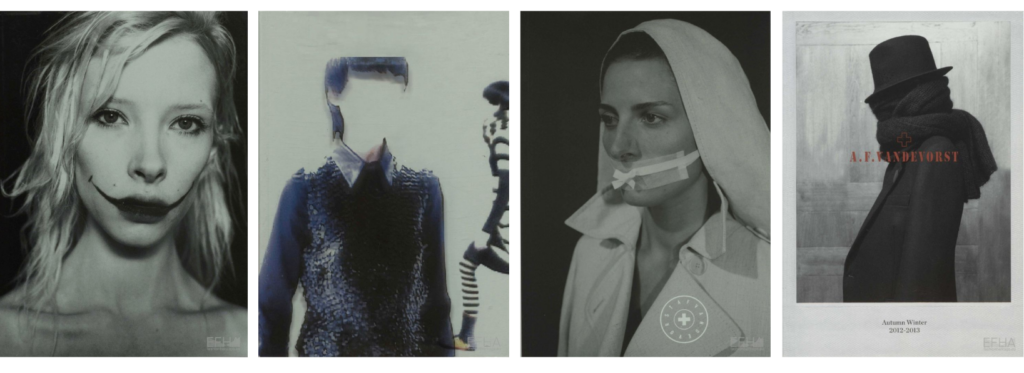
Founded in 1997 by Belgian design duo An Vandevorst and Filip Arickx, A.F. Vandevorst has obtained in the course of the decades a cult reputation for merging experimental tailoring, medical-inspired fetishism and dark romance. Rather than straightforward lookbooks, their printed brand catalogues were conceived as visual essays – filled with mysterious portraiture, faceless silhouettes, taped mouths or even shadowy, veiled figures bearing their signature red cross. Selected for our cabinet, these publications retain an unsettling, poetic tension of turn-of-the-century avant-garde fashion.
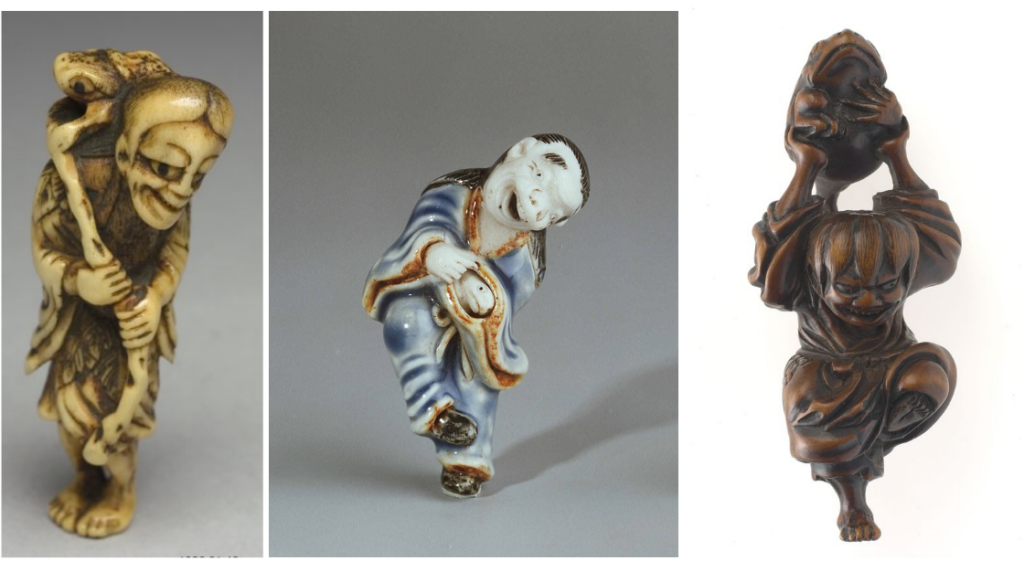
A Gama Sennin is an immortal hermit from Chinese folklore who, aided by a magic toad, possessed the ability to exhale his spirit to let it wander freely. From a polychrome porcelain netsuke with an open mouth and a toad tucked into his sleeve, to a mischievous figure balancing one overhead, to an ivory carving with a croaking companion perched on his shoulder, these statuettes proliferate across our cabinets, filling them with whimsical enchantment.
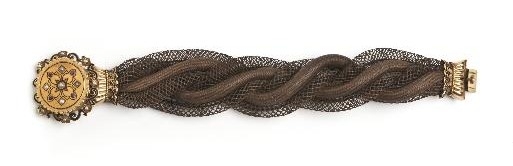
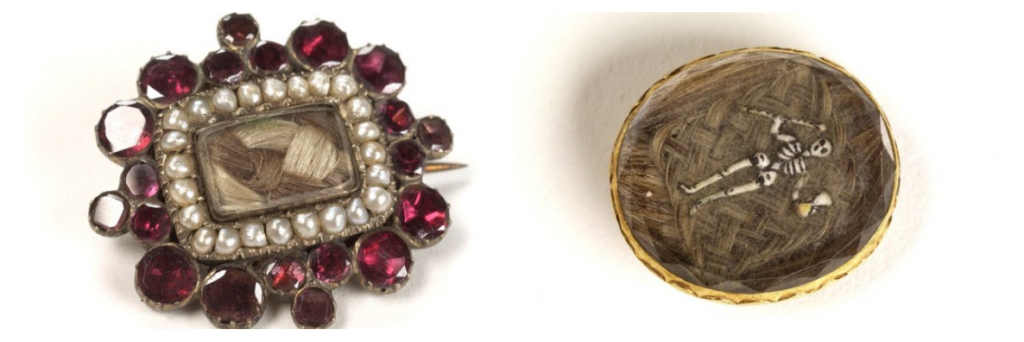
Woven from the hair of the dead and bound in gold, mourning bracelets and brooches carried the body’s most intimate relic against the skin of the bereaved. Whether braided at home by women or fashioned by specialized craftsmen, strands of a loved one’s hair were woven into ribbons, pendants and bands, then combined with gold, pearls and other precious or semi-precious stones, to create pieces that served simultaneously as adornments and relics. This practice flourished throughout the nineteenth century, alongside the use of jet and its substitutes, reflecting the prolonged mourning rituals that shaped the era’s social customs.
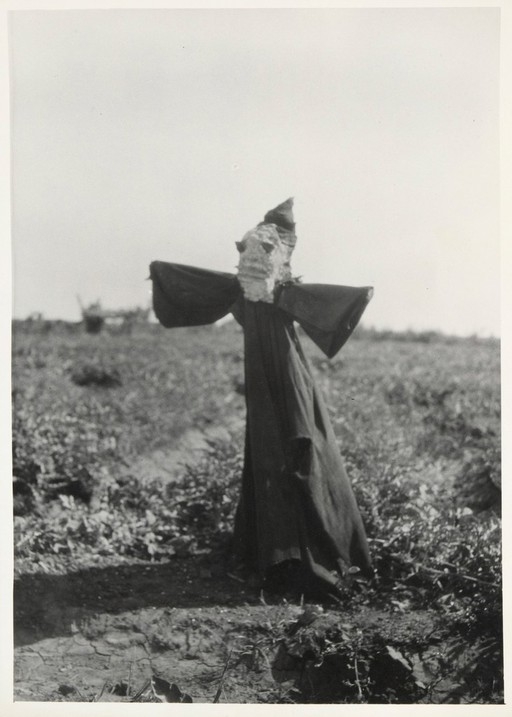
Bear in mind that this photo shows no ordinary scarecrow. Made of clay and coated in whitewash, this figure represents Abu Khof (Father of Fear) and served not only to keep birds and trespassers away from the field but also to protect the area against the evil eye.
This Father of Fear was originally photographed by the pioneering archaeologist, anthropologist and Egyptologist, Winifred S. Blackman in the 1920s near Biba, in Egypt.
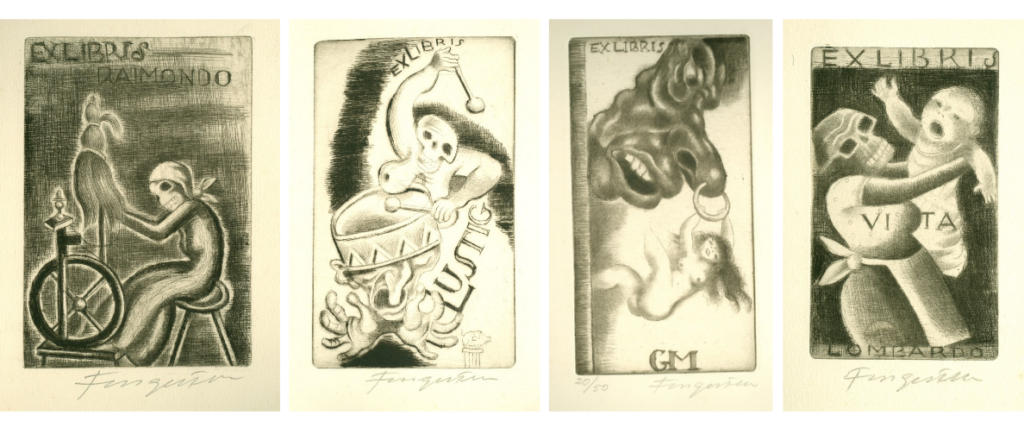
Michel Fingesten (1884–1943) was a Czech-born Jewish painter and printmaker widely celebrated as one of history’s masters of the ex libris – personalized bookplates crafted as miniature works of fine art rather than simple marks of ownership. During his period living in Italy during the late 1930s, he engraved roughly 500 bookplates filled with surreal, symbolic and often disquieting visions. The examples selected for our cabinet, preserved in the collection of the Balatoni Múzeum in Keszthely, carry this distinct, haunting allure.
EFHA World 17.04.2026
Exhibitions 25.01.2021
EFHA World 29.07.2020
Fashion & History 26.09.2019