
Exhibitions 25.01.2021
17.04.2026
accessoriesButtonsClementEuropean fashionHugoSchiaparelliSchumbergerV&A
The new V&A exhibition inspired us to look at our archive and explore Elsa Schiaparelli’s iconic buttons.
The opening of the exhibition Schiaparelli: Fashion Becomes Art at the V&A prompted us to dive in the EFHA archive to find Elsa Schiaparelli buttons and discover the stories of the makers and creators that designed them.
Buttons demonstrate a diverse range of crafts, materials and colours and are a testament to experimentation, artistic collaboration and surrealist vision, as Elsa Schiaparelli worked closely with artists offering the resources, freedom, and support needed for them to extend their own artistic languages into the context of fashion.
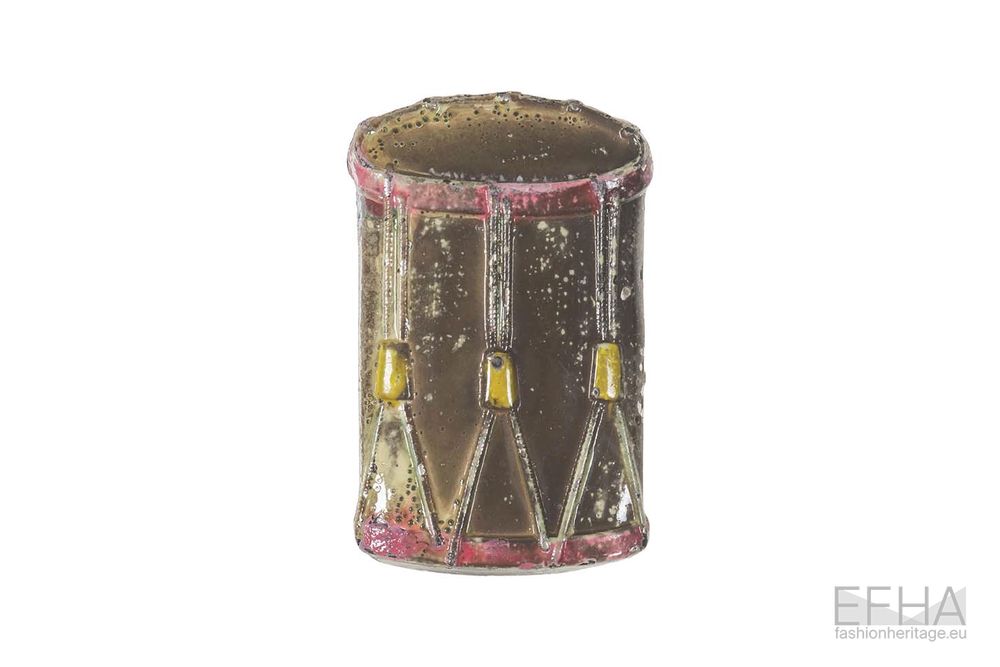
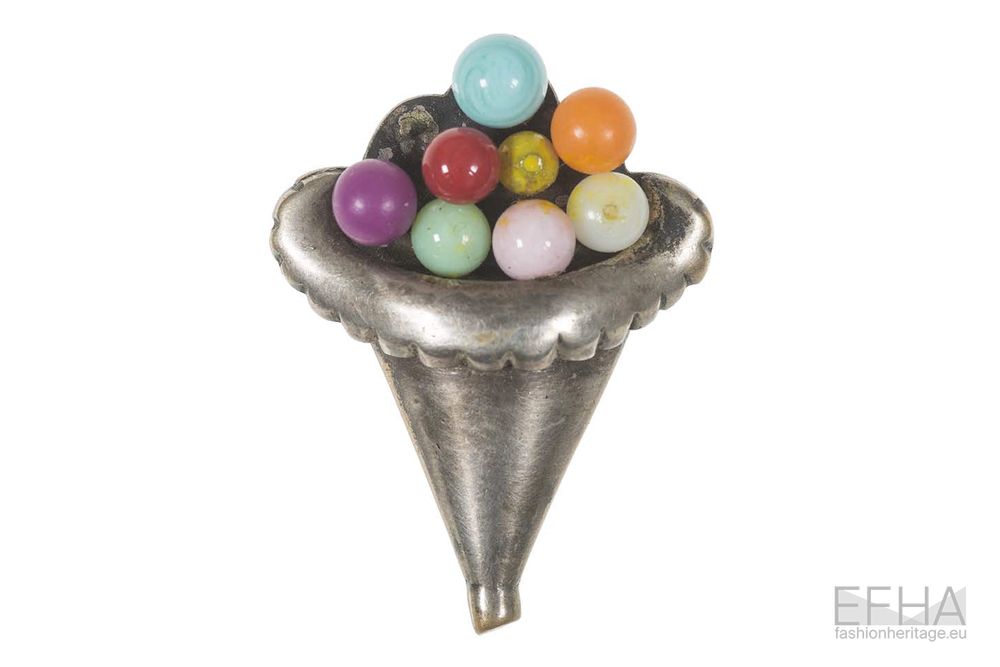
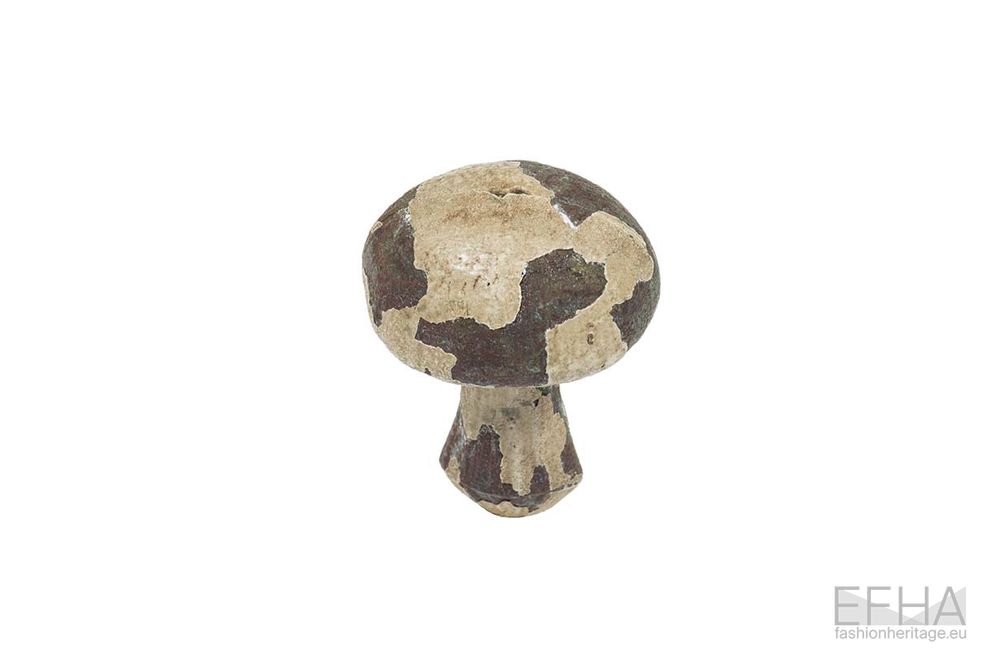
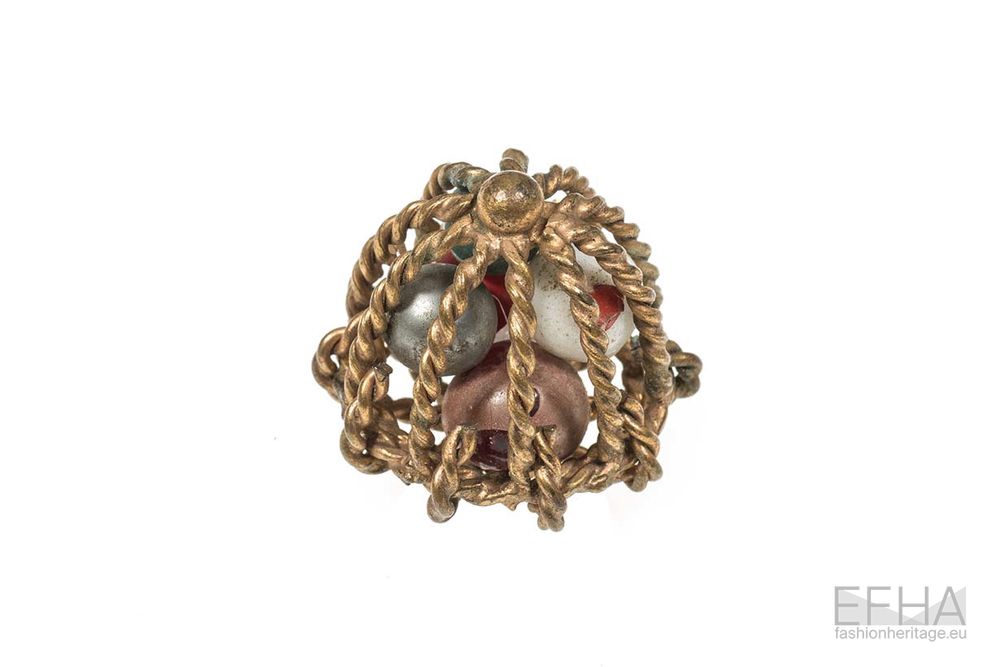
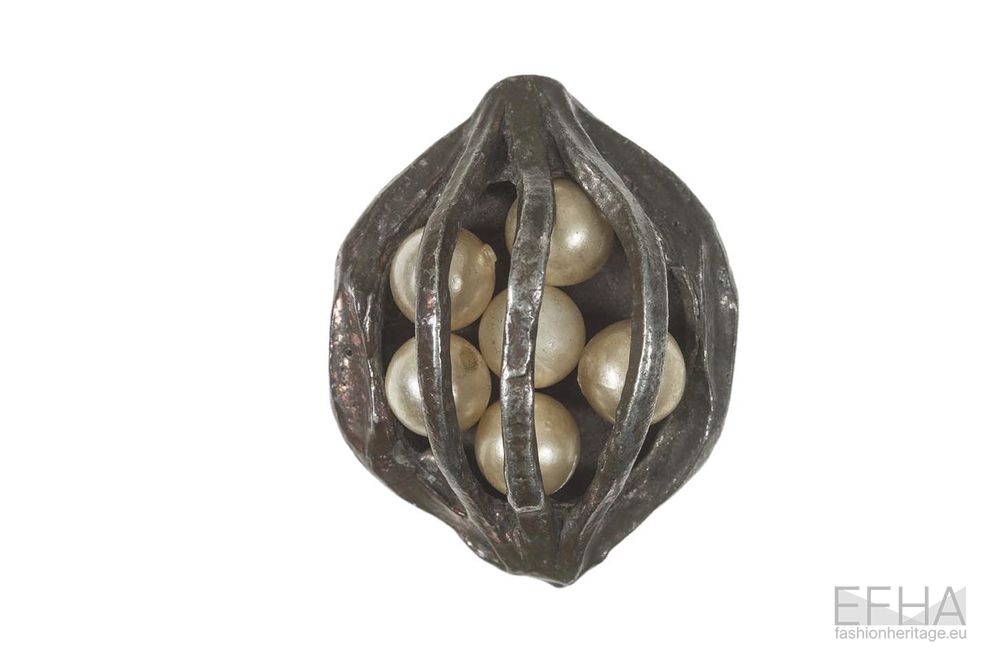
Jean Schlumberger started his career creating buttons for Elsa Schiaparelli in the 1930s. Later known for his innovative designs at Tiffany & Co., Schlumberger’s work for Schiaparelli already showed his technical skills and fascination with natural forms. From mushroom shaped buttons to drum-shaped cylinders and cage-like constructions, his early work reveals the artists’ talent for shaping and assembling metal into intricate sculptural forms, while combining it with a playful spirit. These buttons show Schlumberger’s capability to create texture, movement and depth on a miniature scale.
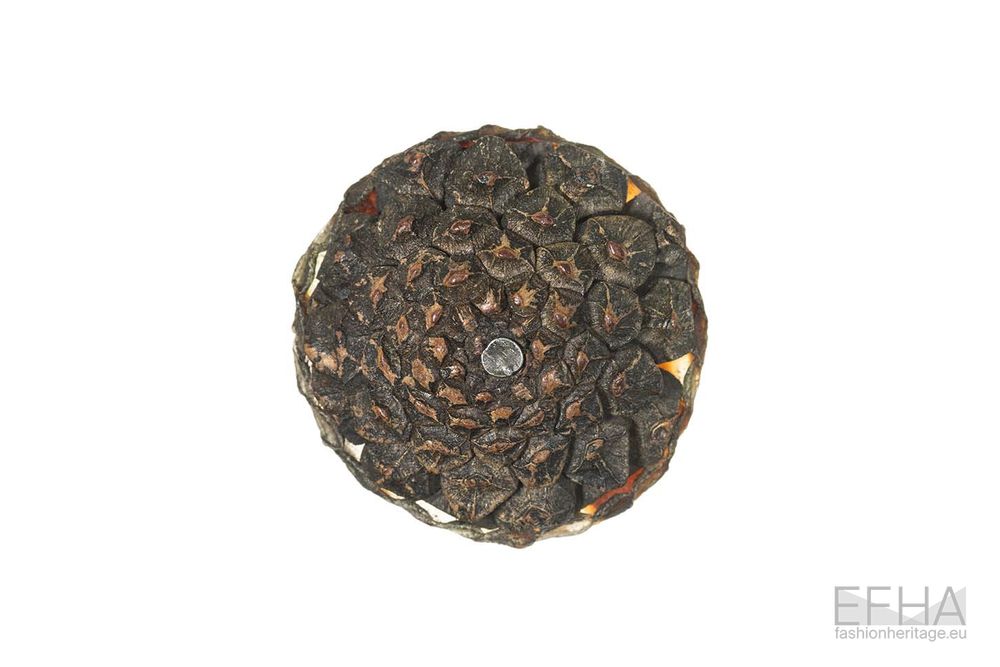
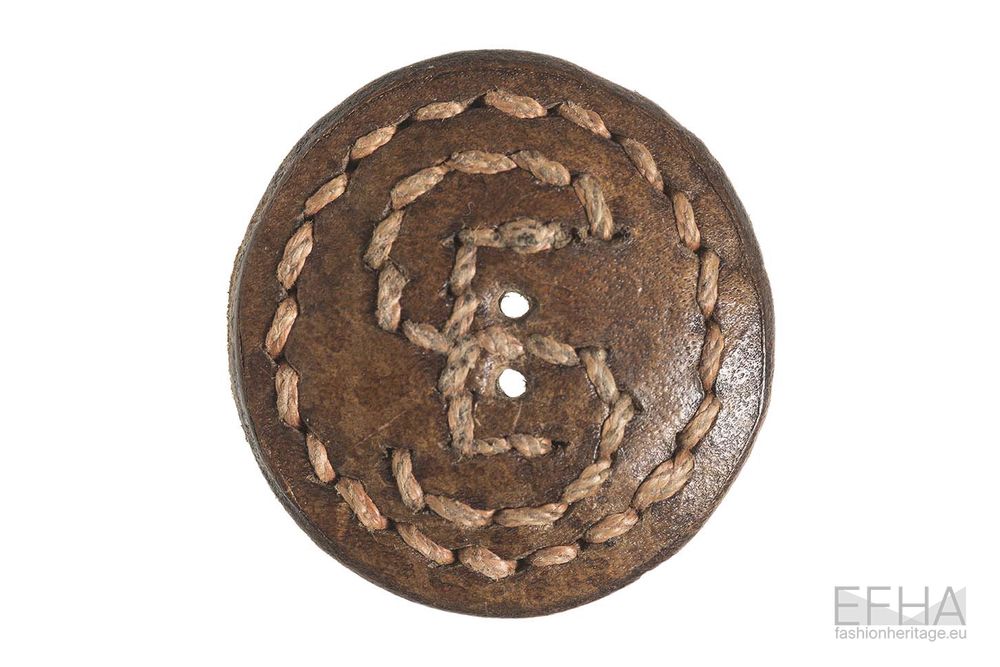
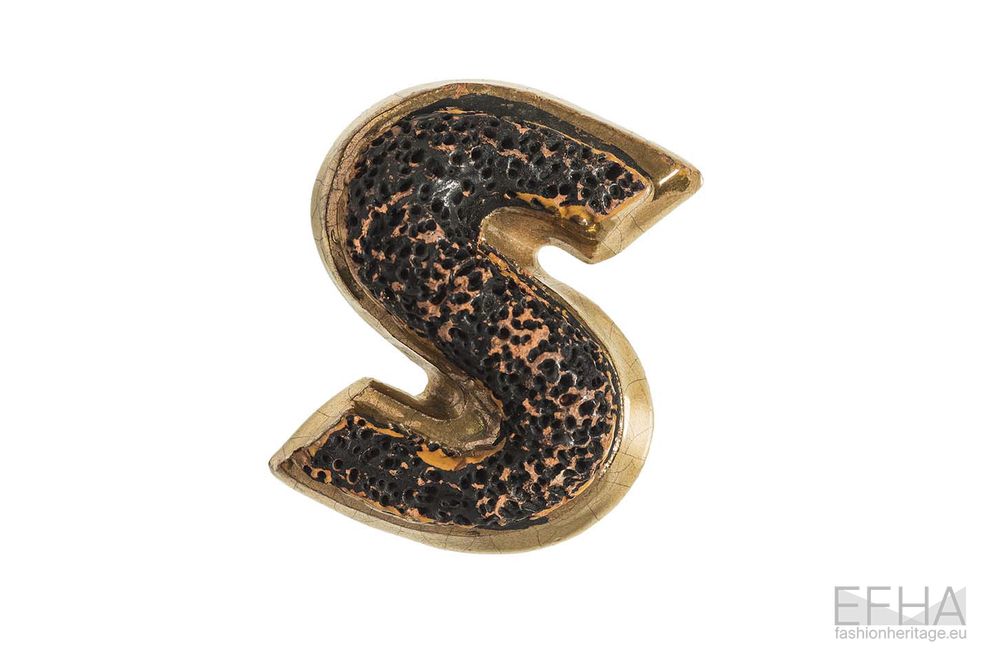
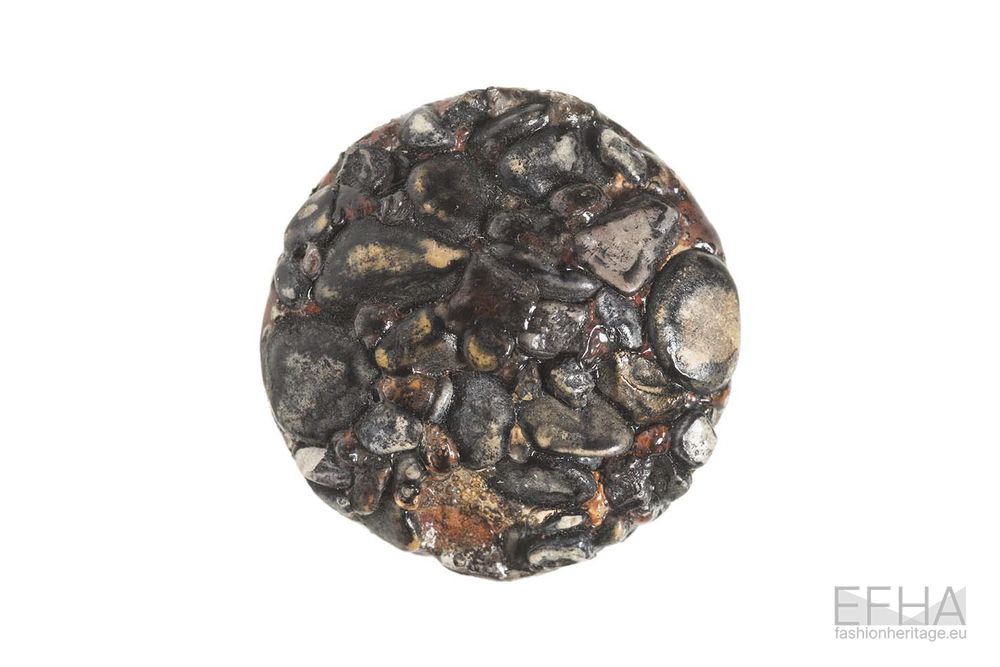
While Schlumberger explored these qualities mostly through intricate metal work, Jean Clément approached them through a more tactile and surface-oriented lens in his buttons for Elsa Schiaparelli. Working with materials such as leather, resin and terracotta, he is able to create buttons with rich textured compositions. One example is the form of the letter “S”, with its surface densely pitted and irregular, creating a contrast between the defined outline and its rough interior. Another button presents a compact circular cluster of pebble-like elements, closely packed to form a stone-like surface. A design shows what seems like the surface of a pine cone, with tightly clustered fragments that form a dense surface recalling this natural growth pattern. A simple yet interesting example is the one of a leather button with the letters “E” and “S” sewn around a circle.
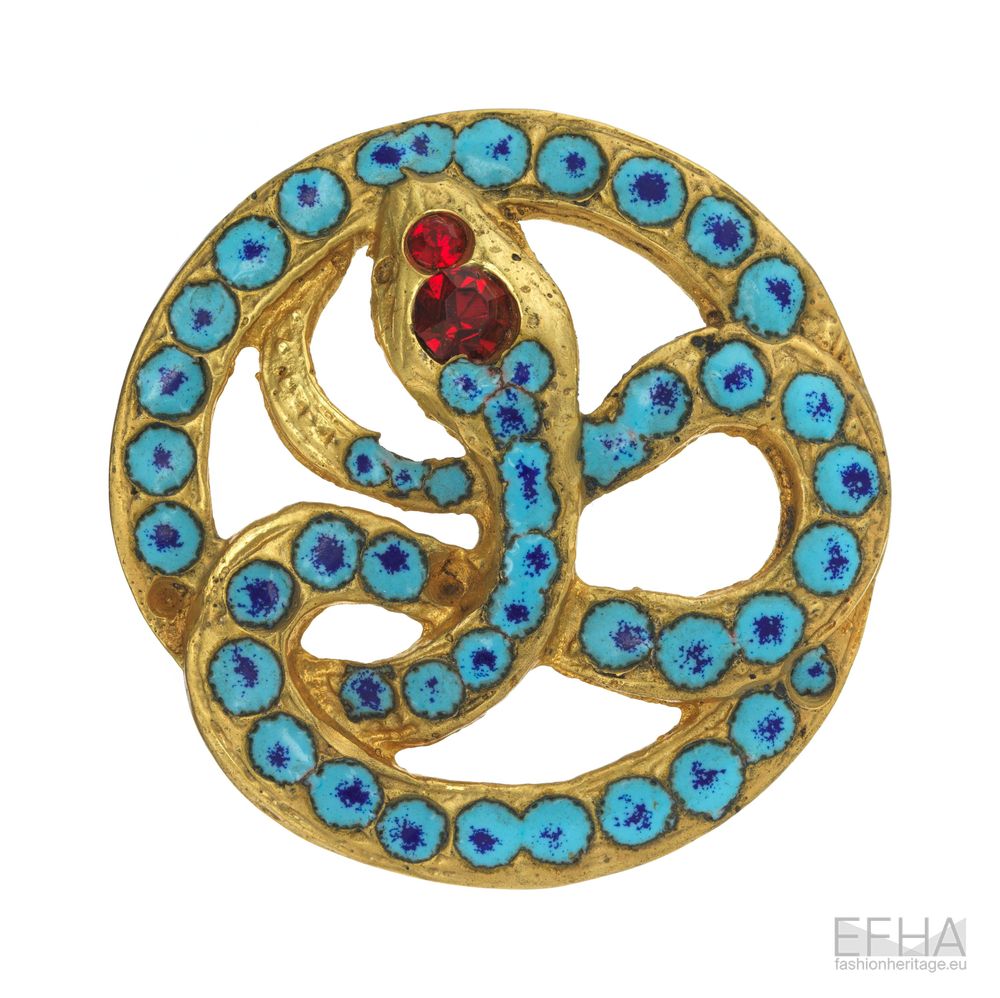
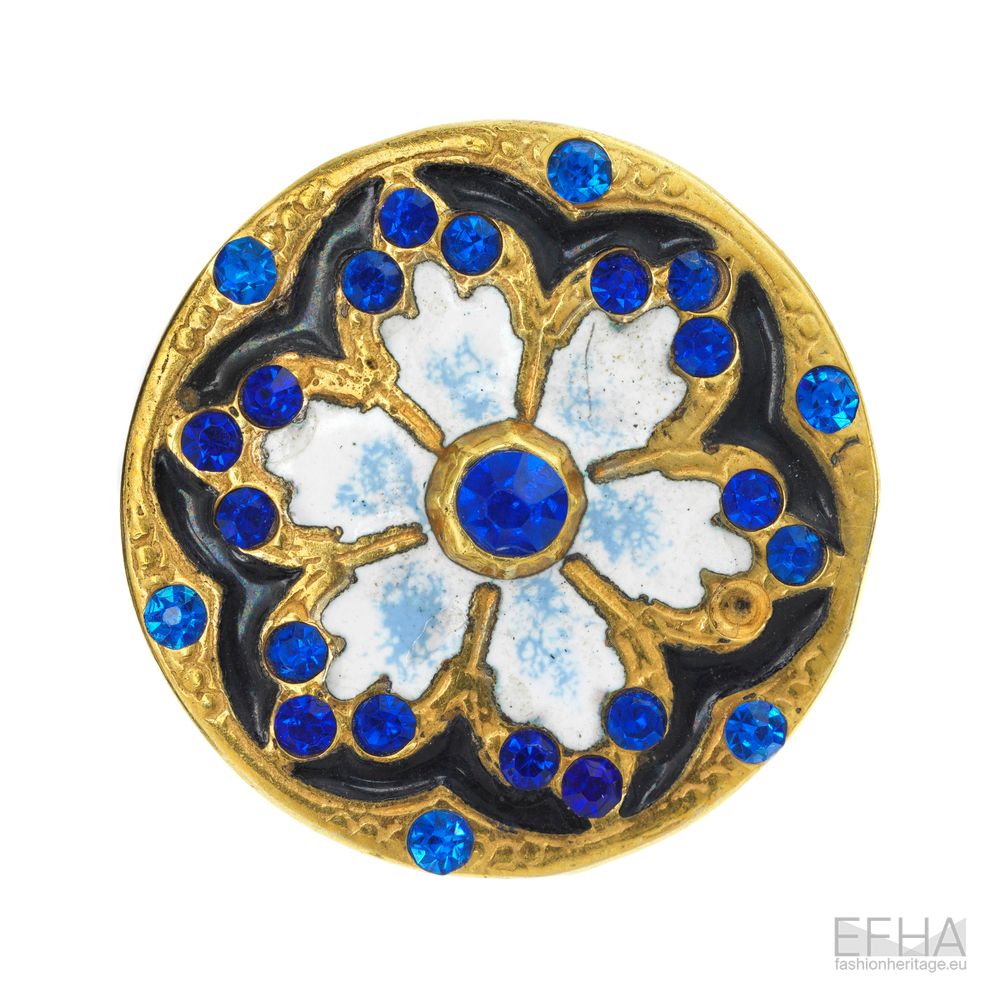
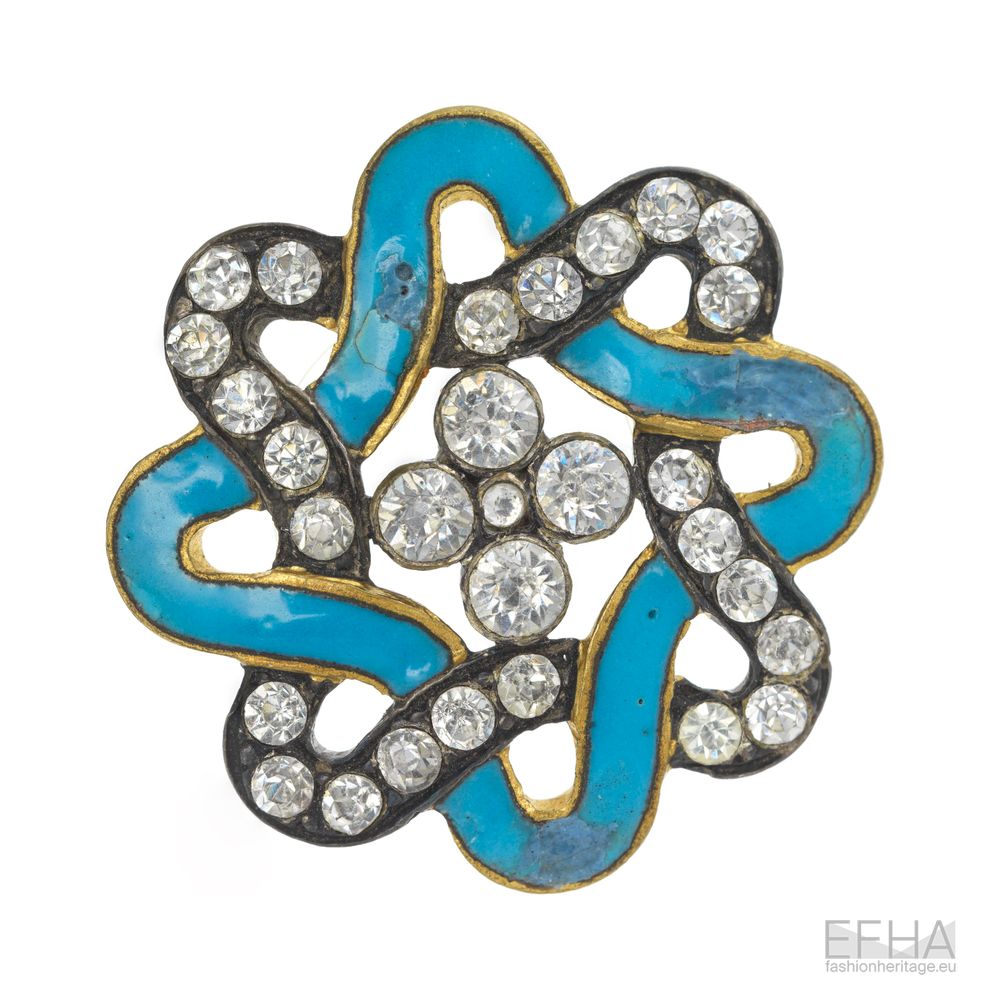
In contrast to this tactile exploration of surface, goldsmith François Hugo brought a more refined and ornamental approach to his collaborations with Elsa Schiaparelli. Part of his buttons for Schiaparelli are distinguished by their intricate detailing and refined use of materials. One example features a button with a six petal flower painted in white enamel, centered with a royal blue rhinestone, each petal edged with three small rhinestones and connected by a circular garland painted in black enamel. Another button presents two intertwined ribbons in a square pattern, the first painted with turquoise enamel and the second adorned with sparkling white rhinestones, all held together by four large rhinestones of a similar design. A circular button featuring a twisted gold metal band shaped like a snake, set with turquoise stones and with two red rhinestones at the head is another example.
This exploration of our archive, focused on Elsa Schiaparelli’s buttons, highlights how even the smallest objects can carry a dense history of artistic experimentation and collaboration. Across these works, we see a wide range of materials and techniques, and a shared commitment to creative invention that defined Schiaparelli’s practice.
Exhibitions 25.01.2021
EFHA World 29.07.2020
Fashion & History 26.09.2019
Fashion & History 11.04.2018