
Fashion & History 19.08.2026
26.08.2026
archivesbeachwearflip-flopsshoes
From love-and-hate object to resilient cultural artifact
As temperatures reach record heights this summer and sudden downpours become part of an unpredictable routine, dressing becomes an exercise in survival. Styling and complex layering are out of the question, and any choice in footwear is narrowed to the ever-present summer accessory: the flip-flop. Lightweight, water-resistant, and unpretentious – but is it? – the flip-flop is the ultimate pragmatic response to endlessly warm summer days.
However, it is often regarded as a polarizing object of design, as it tends to be loved merely for its association with leisure and holiday ease, whilst often being dismissed as the universally ugly shoe mostly for its cheap connotations linked to the manufacturing materials (plastic), their vibrant and mismatched colours and a “worn” attire reached just after a couple of walks. This dichotomy makes the flip-flop occupy a unique space in dress history: an object constantly fluctuating between the every-day mundane – a necessary object – and a desirable high-fashion piece.
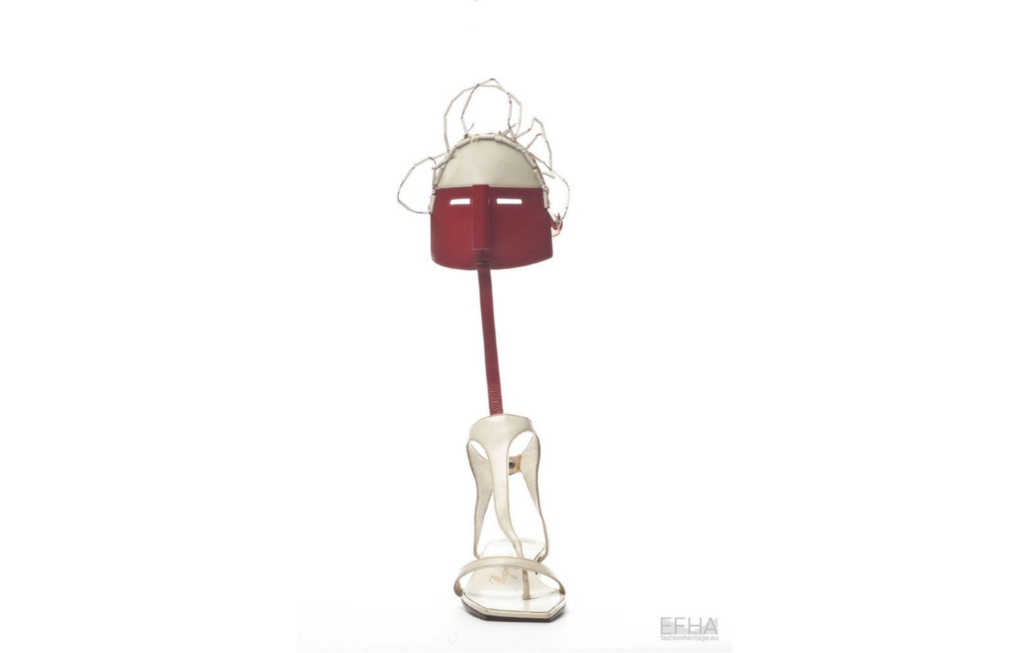
The current resurgence of the flip-flop on streets as well as runways is not a sudden accident, but a continuation of a well-documented style cycle. The EFHA database offers a rich visual history of how materials and shapes, but also cultural meanings, around this footwear category have evolved. In 1958, Italy’s most visionary shoe designer, Salvatore Ferragamo, presented a pair of sandals with not one, but 3 strings to divide toes. Only a decade later, Roger Vivier presented this piece from the collection of MAD Paris demonstrating an early desire to elevate the simple-string silhouette with a sculptural beaded attachment that extends across the wearer’s leg.
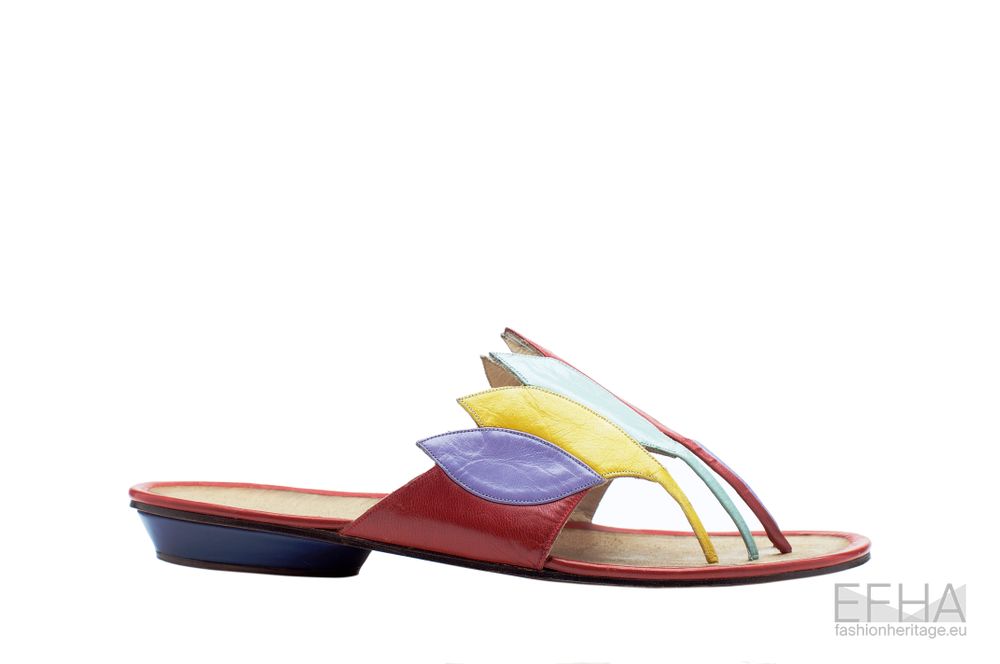
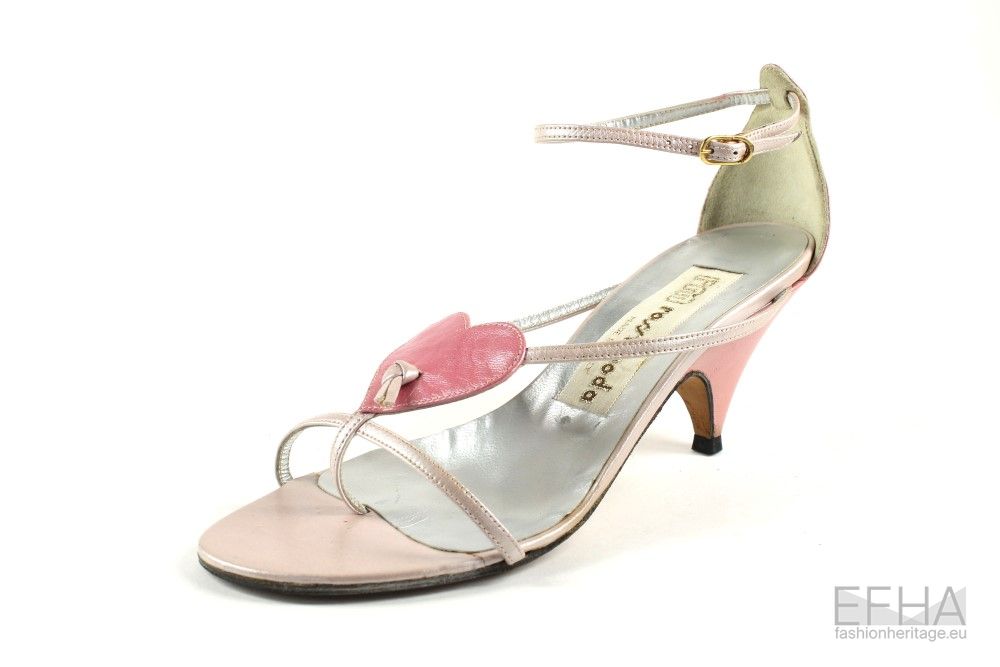
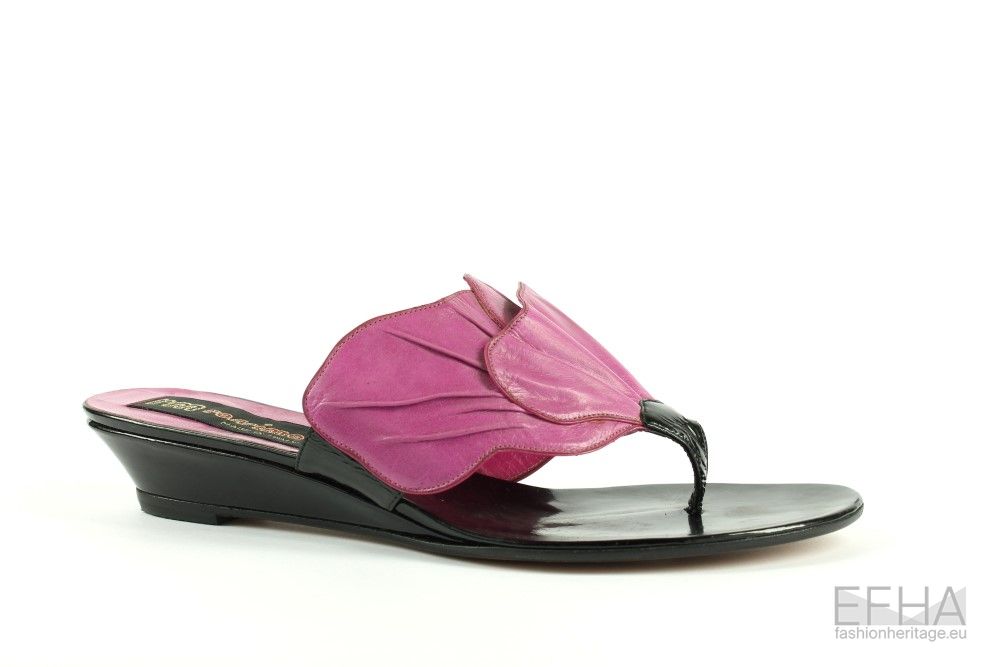
In the 1970s and 1980s then, these sandals from the Rossimoda Shoe Museum collection seem to have long anticipated the Y2K aesthetic (and its later nostalgia) of the current millennium, with a double-pink leather sandal inspired by the typical infradito flip-flop design featuring a kitten heel, or a fuchsia number with decorative petals and a tiny black patent leather platform.
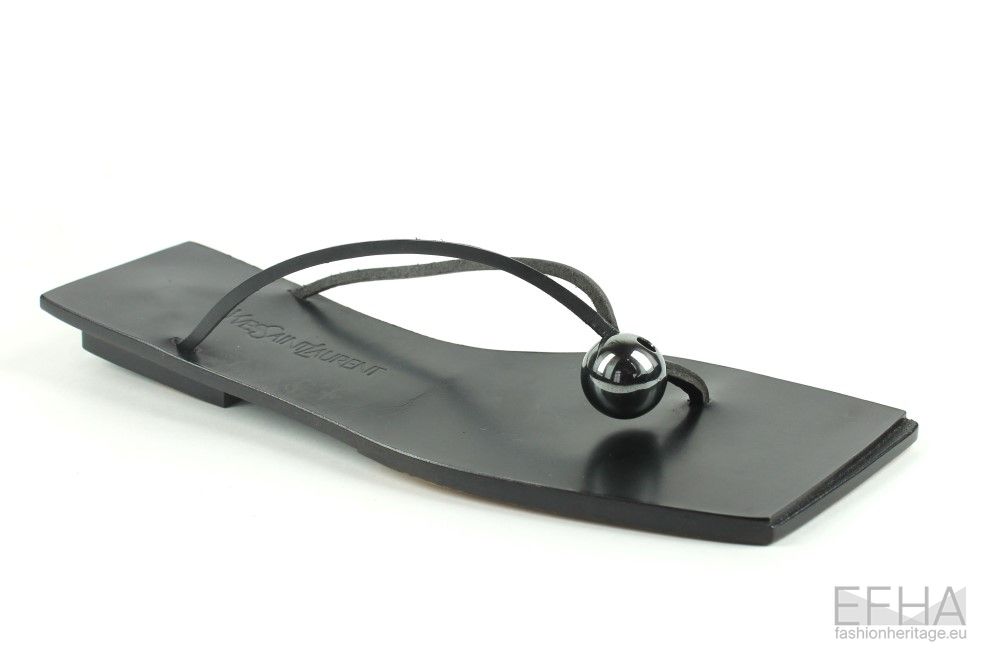
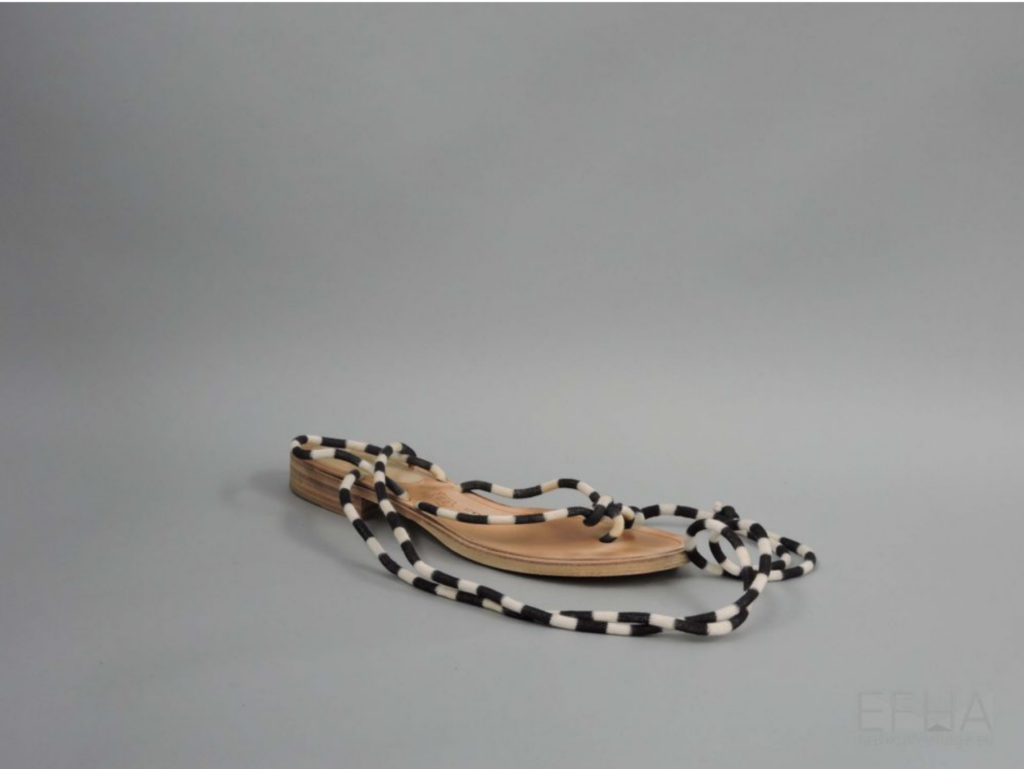
However, high fashion truly established the thong silhouette as a runway staple in the 1990s in the name of essentiality and minimalism, transforming casual beachwear into modern yet understated luxury, as demonstrated by this Yves Saint Laurent 1999 pair. Similarly, this Missoni 1994 sandal captures the essence of the era perfectly while also opposing the trend in a subtle way: it reflects the decade’s obsession with sleek and unadorned minimalism but renders it with raw materials such as a wooden platform and a bicolour cotton cord.
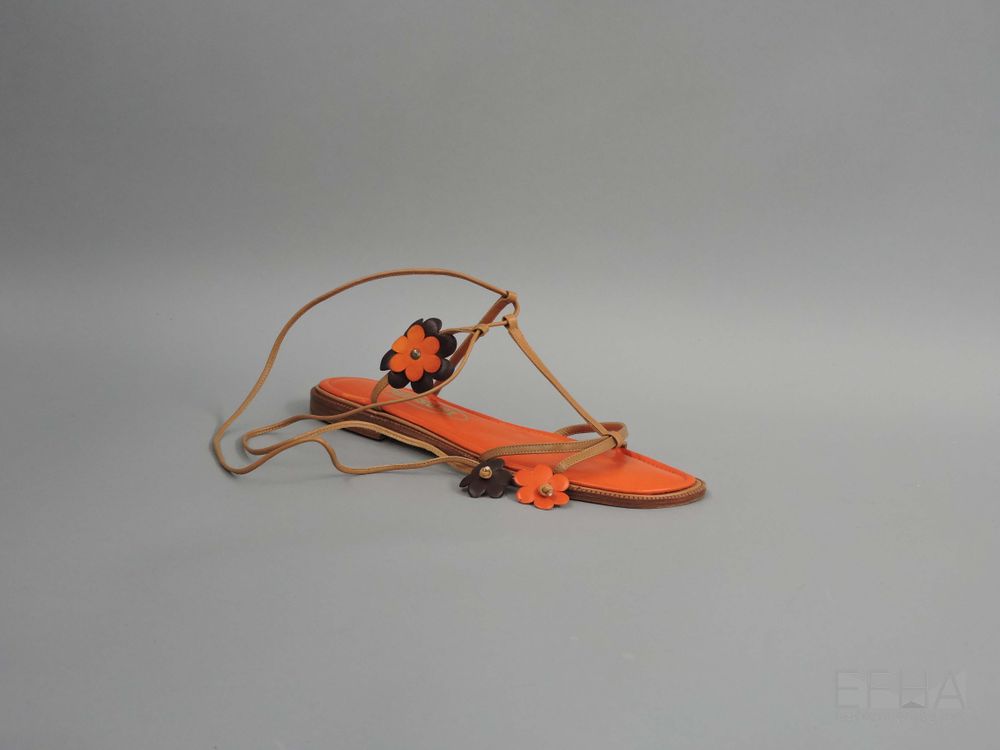
By the early 2000s, the flip-flop hit mass cultural saturation. Bolstered by the Y2K aesthetic and pop-culture iconography, and easily played with vibrant color palettes – the flip-flop became an everyday staple, worn everywhere from red carpets to seaside boardwalks. This 2003 Missoni sandal really transports us into the decade’s vibes, with an unapologetically coloured flip-flop adorned in childlike motifs and colours.
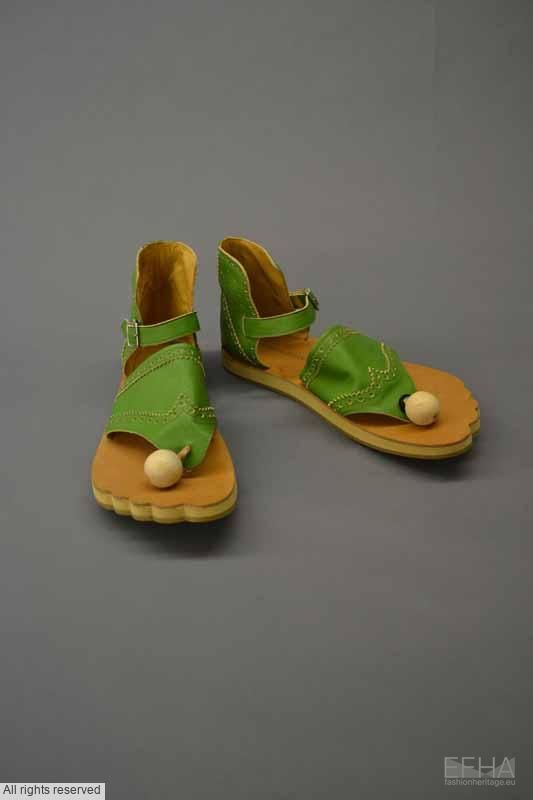
Finally, the flip-flop’s inherent ugliness and anatomical bluntness have made it a favorite canvas for avant-garde provocation. A 2009 menswear piece by Walter Van Beirendonck from the MoMu Antwerp collection features a green leather upper with a wooden ball to divide between the toes and a sole molded explicitly into the shape of a foot with toe markings. The playful design is in perfect tune with the designer’s world, forcing the wearer – and the viewer – to confront the exposed anatomy of the foot while also covering it more than a standard flip-flop does.
Whether classical or reinvented, the flip-flop remains a resilient cultural artifact as summer fashion continues to battle extreme climate changes and (also extreme) nostalgic yearning for past trends. This love-and-hate object proves that oftentimes the most basic is the ones that leave the deepest footprints in fashion history.