

Exhibitions 29.09.2026
12.07.2026
fashion exhibitionfashion heritagehomememory
We sat down with Curator Eve Demoen talks to talk about the exhibition, its protagonists & the challenges of curating a story from lived experiences.
Why did you feel this was the right exhibition to make at this moment?
Several things motivated us to start this project. First of all, our museum is located in Limburg, a quite specific geographic context in Belgium, and we wanted to develop further the research that has been done on fashion in relation to the region. The context is particular because of the mining industry, which is no longer active but used to be very important here. There are a lot of communities in the region, Italian, Moroccan and Turkish, and this influences the way people dress, especially compared with other regions in Belgium such as Antwerp or Brussels.
Secondly, we noticed that a lot of talent comes from the region: people working behind the scenes of the fashion industry, but also prominent designers such as Raf Simons and Martin Margiela. We wanted to organise an exhibition built on personal stories, one that talks about memory in relation to fashion. We connected all these things together, and then we asked Bianca Quets Luzi to be guest curator, because she comes from Genk, one of the mining cities. She worked for Martin Margiela and for Dirk Bikkembergs, and she is CEO of Raf Simons. We began researching this specific situation and these people with a connection to Limburg. It is not that we wanted to highlight a Limburg fashion DNA. We wanted to see what is happening here, who is collaborating, why, what connects them, and what influence the region has on their work.
So Limburg represents much more than the geographical origin of the exhibition’s protagonists. And since the exhibition is titled Memory is Home, how did you translate the concept of home into curatorial choices?
We chose the title Memory is Home because it relates to the work of Raf Simons. He made those memory badges and pins that read “Memory is Home”, “Memory is My Home”. It is something very personal, and it is not only something from the past. It is something you carry with you all your life, and it shapes you. What we found interesting is that these memories are often very individual, yet when you connect the stories of all the people we talked to, they become a collective memory, a collective home.
The experimental aspect of the exhibition is that we normally start from a theme and then research objects. This time we started from the interviews and the personal memories of eighteen protagonists, and the objects followed. It was challenging because we did not know what information we would get, or what kind of objects we would find. We translated the material into a chronological narrative that begins with the protagonists’ starting points, their associations with home, their first encounters with fashion or with the creative industries. In the first room, for example, we present an object each of them chose themselves, the object that sparked their interest in fashion or in a creative profession.
Raf Simons chose a coat his mother used to wear. Hannelore Knuts, the model, chose a light meter, because she began her career as a photography student. As we move through the exhibition we see their first experiments, then their first professional steps. Upstairs, we highlight their work and their influence on the contemporary fashion scene, nationally and internationally.
What was it like to curate an exhibition that relies so heavily on personal memory rather than on traditional archival or historical sources?
It was challenging, of course, because you do not really know what you are going to get. You are relying on personal memories, personal stories and personal objects.
I found it beautiful that some of the people involved in the project, some of the designers, really went back into their archives. That is not easy for them either, going back in time and going through everything, because it makes you reflect on your career. Some of them said it was almost therapeutic to go through their archives and see what they had done. One of them even completely rebranded her fashion house afterwards. I thought that was very nice to hear. It was also quite emotional.
It was not always easy to navigate, but it was very interesting, because we gathered so much new information. They were extremely generous in talking about their youth, about how they were influenced and how they found each other. We collected a great deal of new material.
Some of these oral testimonies were filmed, most were recorded as audio. We now have many new pieces in our digital collection. I have been at the museum a long time and have worked on many exhibitions, and I really think that focusing on emotional, personal stories is relevant work. It resonates with the public, because we are not simply presenting beautiful fashion archives and their stories. It gives you insight into the back office of the fashion industry, and of fashion in general.
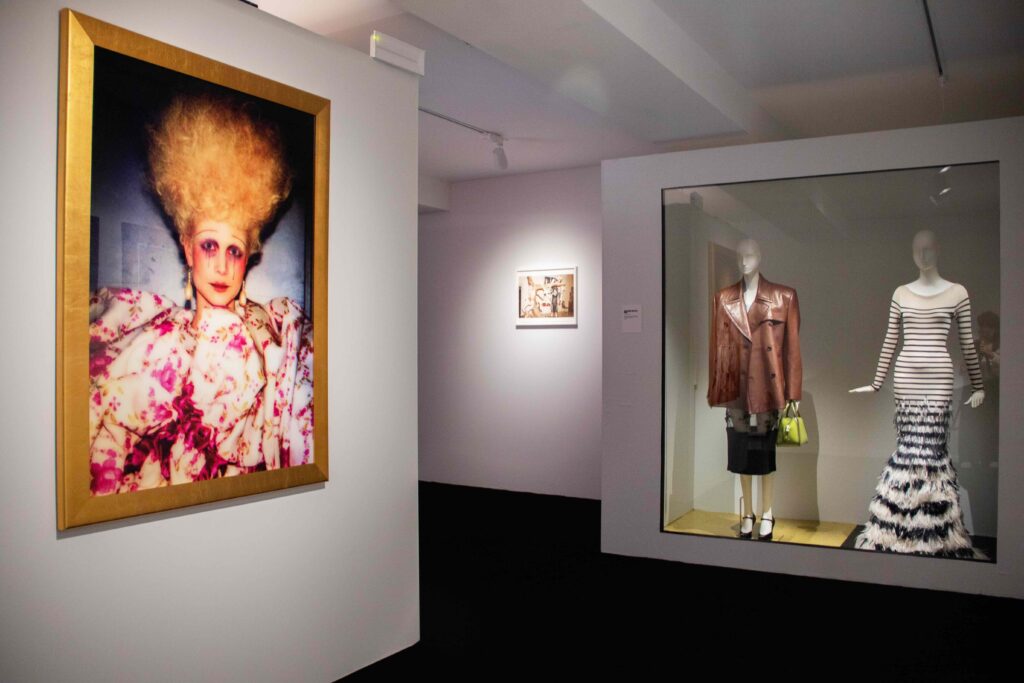
The exhibition combines audio recordings of spoken memories with physical objects. How did you decide on the relationship between these two media? Do they reinforce each other, or do they carry different narratives?
We consider the audio recordings to be objects in themselves. We ask visitors to take their time, to sit in the different gallery spaces and listen, because if they do not, they miss a great deal. So the recordings and the objects do reinforce each other, and visitors can make links between what they hear and what they see. It is not a one-to-one relationship, though. The protagonists are not describing the objects. They are speaking about context, about a specific memory, about how they started their career. Raf Simons, for example, talks about meeting Elke Bernaers at school, about how that affected him and what came out of their collaboration. It is not one-to-one, but the recordings function as objects in their own right.
Fashion exhibitions usually focus on designers. Do you think this exhibition helps people reconsider the behind-the-scenes work of makeup artists, photographers and models, who shape the final image? What was it like to expand the narrative beyond designers?
That was very important to us, and it is important to the museum more broadly, in our collection policy as much as our exhibition policy. We try to focus on the hidden work behind the scenes, and particularly on the work of women in fashion history.
We wanted to highlight the designers too, of course, but the work behind the scenes is what the exhibition discusses. In the end we have eighteen protagonists, though it could as easily have been a hundred. The professions are very different, from a makeup artist such as Inge Grognard to a CEO such as Bianca Quets Luzi. This mattered to us because the designer is not solely responsible for the final result that people see on the catwalk or in an editorial. It is a collaboration. Inge Grognard was seminal for the entire identity of Maison Martin Margiela. The same is true of Jenny Meirens: the wider public barely knows her, but she co-founded the house alongside Martin. She was responsible for many important business and even artistic decisions, including the choice of the white label, to which Margiela then added the four stitches. She also played a significant role in Belgian fashion history and in its promotion on the international scene.
All these people are important. The work they do is crucial to the final result we see online, in books, everywhere. That was one of the things we most wanted to highlight in the exhibition: the work behind the scenes, and the collaborations.
Bianca, who curated the exhibition with me, has been at Raf Simons’s side for almost twenty years. She takes on many roles. She is not only the CEO, she is also a mentor and a caring figure for the designer. It felt important to make that visible as well.
The exhibition makes it clear that creative careers do not develop in isolation. How did working with Bianca, who occupies such an unusual position in the fashion world, shape the exhibition?
It was very interesting to see how the fashion industry works and how a museum works. Bringing the two worlds together was challenging, because their foundations are so different. But Bianca connects people, she has a very broad network, and she has the knowledge: she grew up in Genk, she worked at Margiela, she worked at Bikkembergs. Collaborating with a CEO, which is quite unusual, brought a different perspective into the museum. She is embedded in the industry, and I think that allowed us to go further with these testimonies than we otherwise would have. A museum tends to keep its distance, to be more objective.
The result is a very subjective story. Bianca brought in her own reflections, and where we would normally place gallery texts providing context, we give her reflections on specific themes. It is a very different exhibition from the ones we usually make. It is still grounded in research, in oral history, but the approach to fashion is different, and that is what makes it interesting. I think we will take a lot from this exhibition and this experience into the next ones.
Is there a personal story that stayed with you?
I am personally very interested in these women who work behind the scenes and occupy a caring position: not only their professional careers, but the way they look after these designers, and what their roles actually are. I find it striking, particularly the story of Jenny Meirens, partly because I have written about her and the subject interests me a great deal. What strikes me is that these women barely appear in fashion history books. They are a footnote, when in fact they were so important.
And it was a treat to receive so much. People were extraordinarily generous with their information. Olivier Rizzo spoke about his childhood memories. He still remembers being three or four years old, going to school and seeing his teacher wearing blue stockings. He was completely bedazzled by them, and it was the first time he understood the power of styling. He could not work out how it was possible that somebody had blue legs, and he drew figures with blue legs for weeks afterwards.
It is a real pleasure to encounter the people behind the industry, because fashion is a tough business. Hearing these stories was interesting and moving. That was essential for us: to tell the stories of people. Not necessarily the big designers or the big stylists, but the people behind them, and the collaborations behind them. The human side of fashion.
What do you most hope visitors will take away?
I hope they can relate to what they hear and to what they see. And I hope, especially for the younger generation, that they are inspired. Bianca finds this very important: that young visitors who come to the museum, who come from the region, who did not grow up in a big city, understand that anything is possible. That is something you really see in this group of people. They are all very different, but they share a drive to do something, to make something. Inspiring people is one of our main goals: giving them the motivation to act, and to break out of their own worlds.
Exhibitions 29.09.2026
Exhibitions 16.09.2026

Designers 05.08.2026
Designers 12.03.2026