
EFHA World 12.01.2026
12.03.2026
European fashionfashion exhibitionHaute Couturetextile heritage
A landmark exhibition celebrates two masters of French Couture at Prato’s Museo del Tessuto
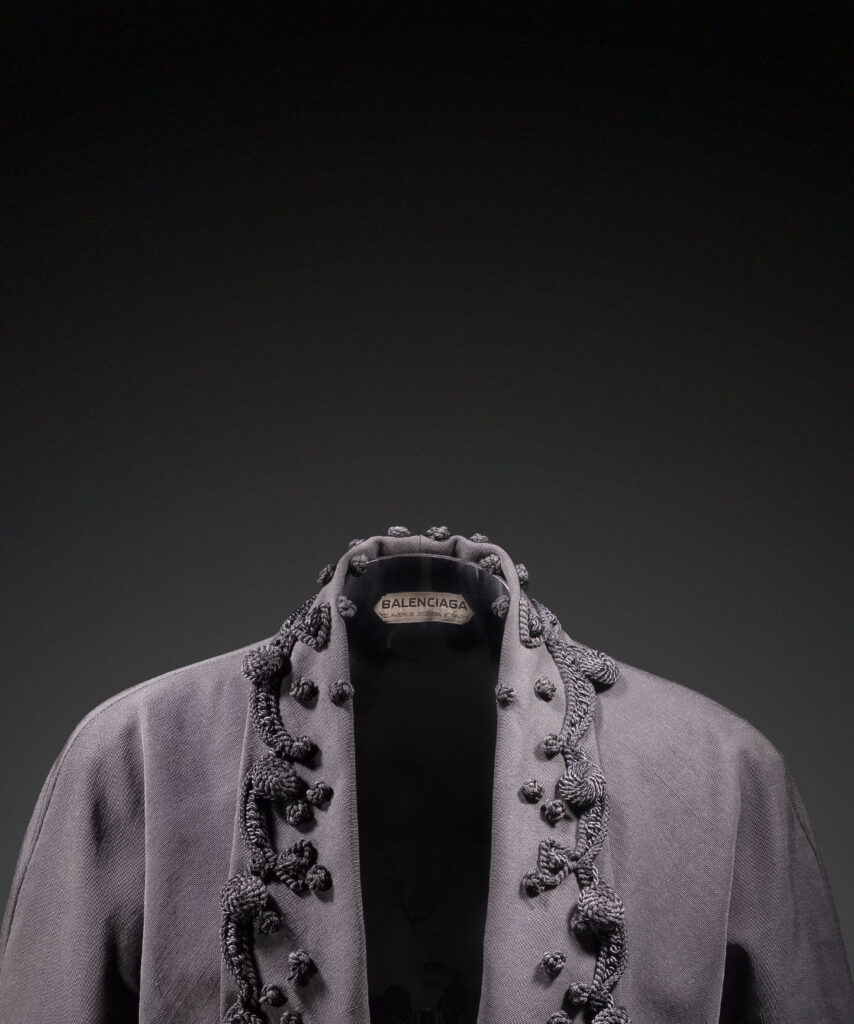
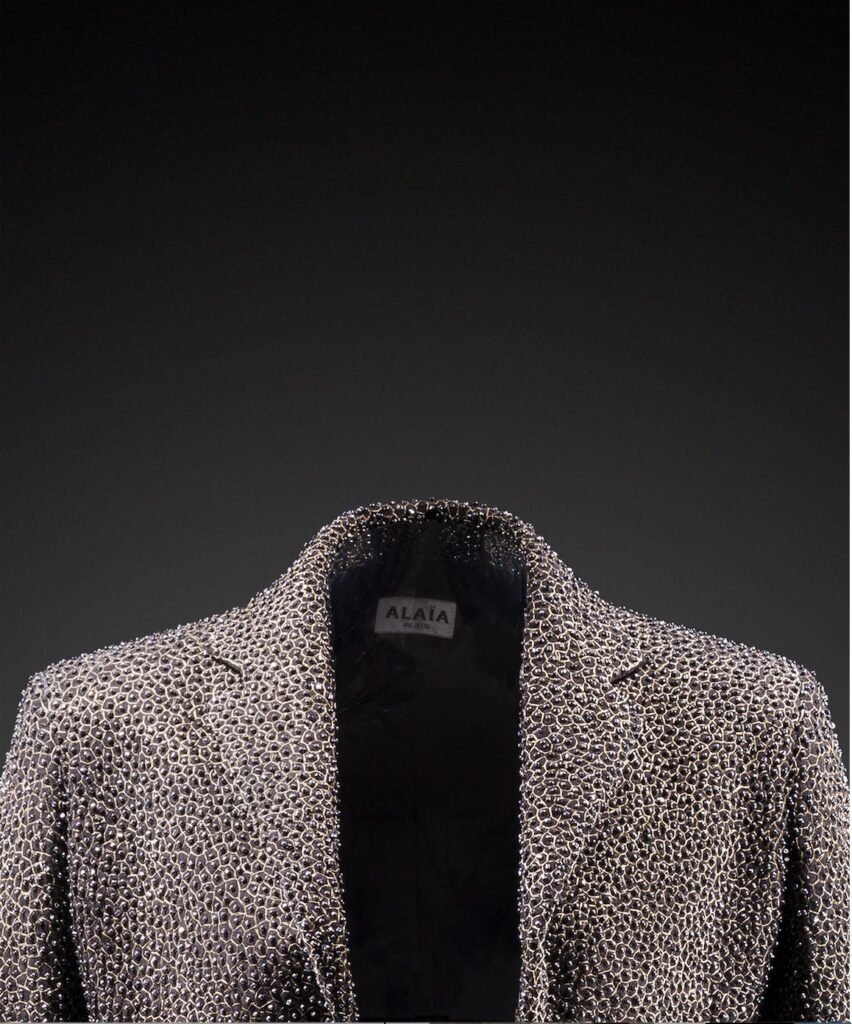
The Museo del Tessuto Foundation marked the culmination of its 50th anniversary celebrations with a major exhibition bringing together two of fashion’s most visionary architects. Azzedine Alaïa, Cristóbal Balenciaga: Sculptors of Shape, curated by Olivier Saillard, presents 50 masterpieces from the Azzedine Alaïa Foundation in Paris alongside original drawings from the Balenciaga Archives.
The exhibition fulfils a long-held wish of the late Hubert de Givenchy, who, as a great admirer of both designers, envisioned a dialogue between these two masters of Couture. Created in collaboration with the Azzedine Alaïa Foundation, chaired by Carla Sozzani, and with the patronage of the French Embassy in Italy, the exhibition features the extraordinary participation of the Balenciaga Archives in Paris. The display has been specifically designed for the exhibition spaces of Prato’s former Campolmi factory, with a layout by Guicciardini & Magni Architetti in collaboration with Arianna Sarti.
Twenty-five garments by Alaïa enter into conversation with an equal number by Balenciaga. The display is enriched by twelve original Balenciaga drawings from 1950 to 1968, shown in Italy for the very first time. Some sketches include technical notes for tailoring and fabric samples, and they are accompanied by archival photographs of the garments being worn, offering valuable insight into the designer’s creative process.
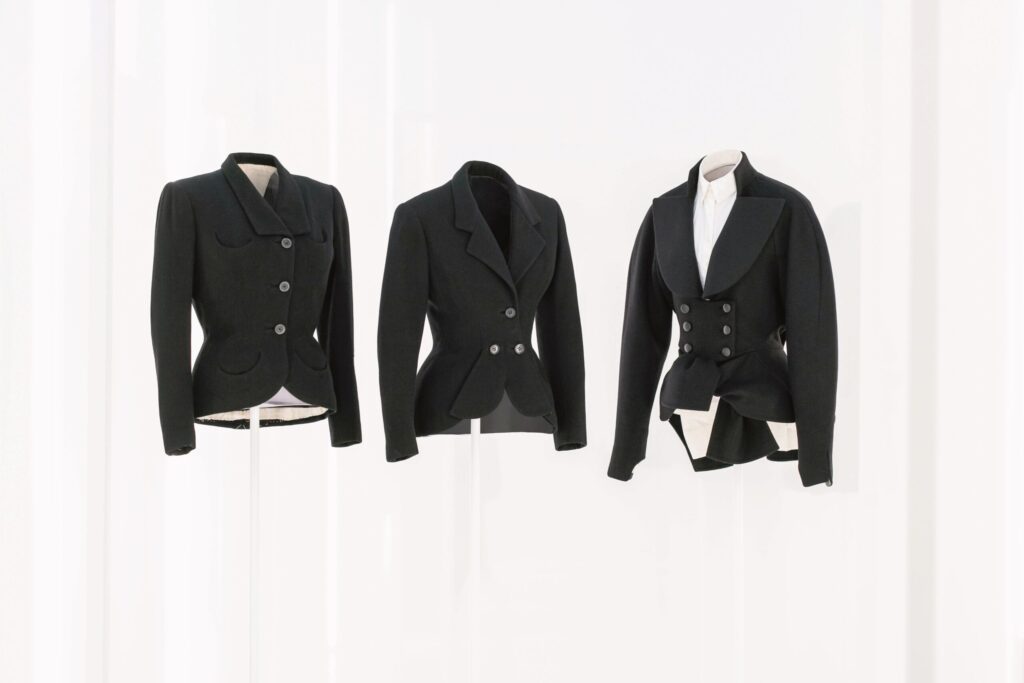
The exhibition reveals a profound continuity between the two artists. Both learned to sew within their families and built careers serving an influential Parisian clientele while remaining fiercely independent. When the Maison Balenciaga closed in 1968, a young Alaïa was invited to select garments from the atelier, an encounter he later described as the starting point of his own journey.
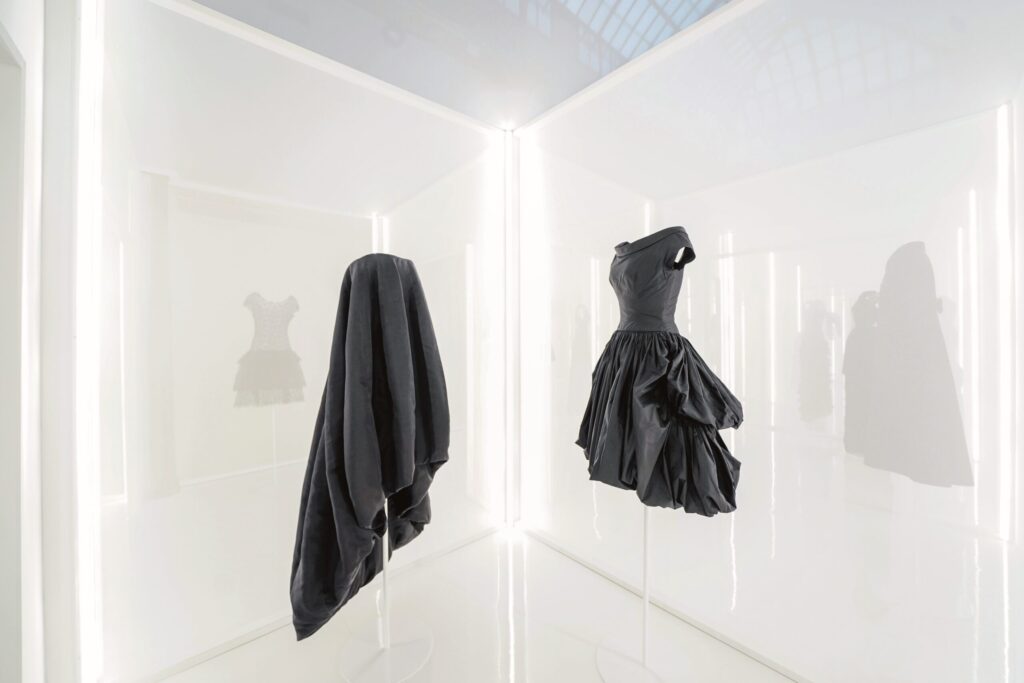
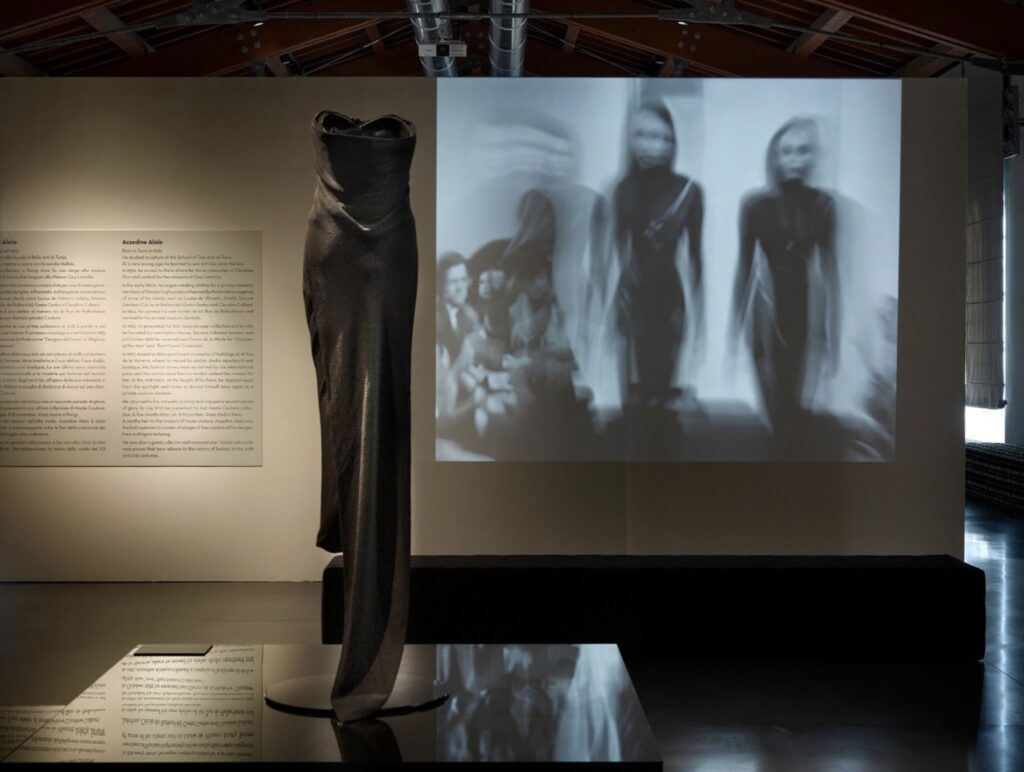
Fabric serves as their shared medium, yet their approaches diverge in revealing ways. Balenciaga shaped wools, satins, and silks into sculptural volumes that stand away from the body, creating wearable architecture. Alaïa transformed knitted fabrics into a second skin, wrapping and sculpting the body with precision. Balenciaga’s work achieves formal elegance, while Alaïa’s emphasizes the body’s contours – two distinct expressions born from the same couture discipline.
The exhibition unfolds across three thematic sections. Atelier Tailleur explores structured garments, where Balenciaga’s sculptural 1938 jacket connects with Alaïa’s 1986 Spencer jacket. Atelier Flou celebrates fluidity, where Balenciaga’s architectural balloon skirts contrast with Alaïa’s bias-cut draping. The final section, Spain, honours shared heritage through explorations of flamenco ruffles, boleros, and lacework.
Two films complete the experience: a biography of Alaïa by fashion editor Joe McKenna, and never-before-seen footage of Balenciaga’s Haute Couture presentations from 1960 and 1968, courtesy of the Balenciaga Archives.
For the Museo del Tessuto, this exhibition continues a distinguished programme devoted to 20th century fashion, following presentations on Gianfranco Ferré, Walter Albini, and Ossie Clark and Celia Birtwell. It offers a rare opportunity to witness the work of two designers who, though separated by generations, remain united in their mastery of shape, their commitment to craftsmanship, and their enduring influence on the art of couture.
EFHA World 12.01.2026
Exhibitions 21.11.2025
EFHA World 20.10.2025
EFHA World 06.10.2025